
04.12.25
Artificial intelligence has long since become more than just an experiment – it is shaping the future of communication. But how can companies integrate AI strategically, not only to achieve short-term success but also to remain relevant in the long term? This question was a recurring theme throughout the CommTech Summit 2025 in Mainz.
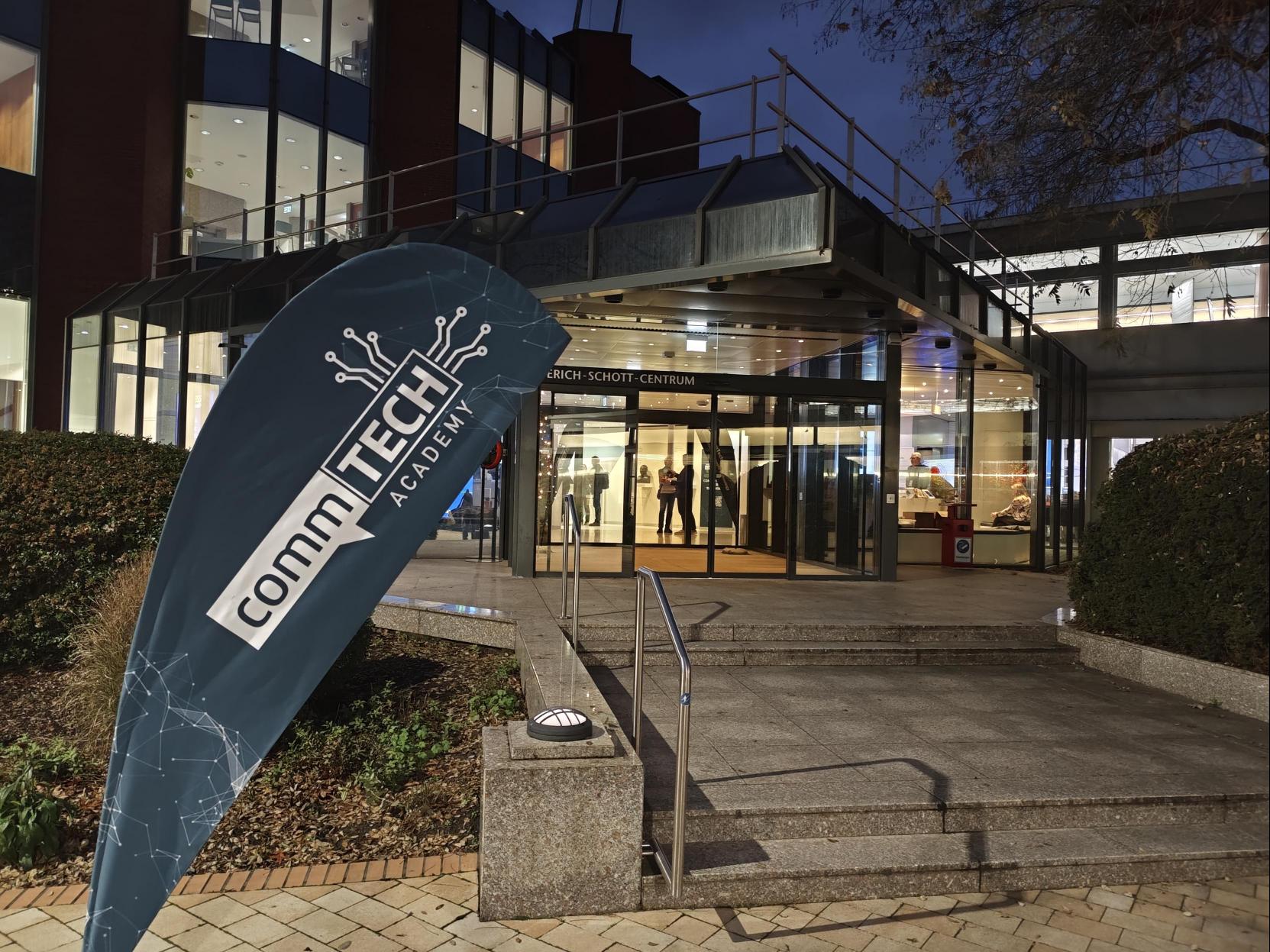
On the 25th of November 2025 about 250 communications experts met at the Schott AG in the capital of Rhineland-Palatinate, to discuss the digital landscape of the sector : How does Artificial Intelligence of the sector and what strategic decisions are now requiredto ensure long-term sustainability?
The Red Queen is causing a drop in the CommTech Index
A key topic was the recently published CommTech Index Report, the industry’s digitalisation barometer. With a score of 38 out of 100 and a drop of seven points compared with the previous year, the result initially appears to be a step backwards. However, the so-called Red Queen Effect makes it clear that even though companies are innovating faster, it seems as though they are not making headway because technology is developing at an even more rapid pace. Rather than burying their heads in the sand, industry experts are increasingly viewing progress as a long-term transformation process – not as a quick sprint.
From quick wins to strategic integration
A clear trend emerged at the summit: initially, AI was primarily associated with quick wins, such as time savings in content creation. However, it became clear at the summit that artificial intelligence must move into the next phase: sustainable and strategic integration that goes beyond short-term efficiency gains. According to David Willmes, Head of Media Distribution and Campaigning at SCHOTT AG, three factors are key to achieving this: cultural embedding within the corporate context, a solid data foundation and the right tech stack.
The key point is that AI must become an integral part of corporate culture – not merely as another tool in the digital toolbox, but as a driver of cultural change. The issue of governance is also particularly important: structures must be put in place that go far beyond IT and legal considerations and, in particular, take ethical dimensions into account.
Data-driven communication as a deal-breaker
“Communication without a factual basis is fatal. It is self-defeating,” as Stefan Moriße, Vice President of External Communications & Media Relations at E.ON Energie Deutschland GmbH, aptly put it.
Communication can only contribute strategically to business development if smart objectives are defined and the impact of the measures is measured. However, the reality is often quite different: many communications departments still measure outputs rather than outcomes, reach rather than impact, and press cuttings rather than reputation. Only a structured data infrastructure with consistent impact measurement can turn artificial intelligence into a genuine tool for relationship management and strategic steering.
The role of communicators
Digital transformation is a cultural challenge that must be actively shaped by communicators. Susanne Marell, Executive Board Member for Corporate Affairs at the Schwarz Group, identifies three key roles in this regard: as catalysts for new ways of working and technologies, as architects of a data-driven communication strategy, and as navigators through the company’s digital transformation.
As a result, the digitalisation of communication is increasingly becoming a strategic management task and a key factor in determining reputation and competitiveness.
Those who set the right course now will not only ensure their company’s long-term viability, but will also play an active role in shaping the transformation of professional communication. As a consultancy that takes a strategic approach to communication, we support you every step of the way – from strategy development through to implementation and the sustainable embedding of these changes within your organisation.
04.12.25
Artificial intelligence has long since become more than just an experiment – it is shaping the future of communication. But how can companies integrate AI strategically, not only to achieve short-term success but also to remain relevant in the long term? This question was a recurring theme throughout the CommTech Summit 2025 in Mainz.
On the 25th of November 2025 about 250 communications experts met at the Schott AG in the capital of Rhineland-Palatinate, to discuss the digital landscape of the sector : How does Artificial Intelligence of the sector and what strategic decisions are now requiredto ensure long-term sustainability?
The Red Queen is causing a drop in the CommTech Index
A key topic was the recently published CommTech Index Report, the industry’s digitalisation barometer. With a score of 38 out of 100 and a drop of seven points compared with the previous year, the result initially appears to be a step backwards. However, the so-called Red Queen Effect makes it clear that even though companies are innovating faster, it seems as though they are not making headway because technology is developing at an even more rapid pace. Rather than burying their heads in the sand, industry experts are increasingly viewing progress as a long-term transformation process – not as a quick sprint.
From quick wins to strategic integration
A clear trend emerged at the summit: initially, AI was primarily associated with quick wins, such as time savings in content creation. However, it became clear at the summit that artificial intelligence must move into the next phase: sustainable and strategic integration that goes beyond short-term efficiency gains. According to David Willmes, Head of Media Distribution and Campaigning at SCHOTT AG, three factors are key to achieving this: cultural embedding within the corporate context, a solid data foundation and the right tech stack.
The key point is that AI must become an integral part of corporate culture – not merely as another tool in the digital toolbox, but as a driver of cultural change. The issue of governance is also particularly important: structures must be put in place that go far beyond IT and legal considerations and, in particular, take ethical dimensions into account.
Data-driven communication as a deal-breaker
“Communication without a factual basis is fatal. It is self-defeating,” as Stefan Moriße, Vice President of External Communications & Media Relations at E.ON Energie Deutschland GmbH, aptly put it.
Communication can only contribute strategically to business development if smart objectives are defined and the impact of the measures is measured. However, the reality is often quite different: many communications departments still measure outputs rather than outcomes, reach rather than impact, and press cuttings rather than reputation. Only a structured data infrastructure with consistent impact measurement can turn artificial intelligence into a genuine tool for relationship management and strategic steering.
The role of communicators
Digital transformation is a cultural challenge that must be actively shaped by communicators. Susanne Marell, Executive Board Member for Corporate Affairs at the Schwarz Group, identifies three key roles in this regard: as catalysts for new ways of working and technologies, as architects of a data-driven communication strategy, and as navigators through the company’s digital transformation.
As a result, the digitalisation of communication is increasingly becoming a strategic management task and a key factor in determining reputation and competitiveness.
Those who set the right course now will not only ensure their company’s long-term viability, but will also play an active role in shaping the transformation of professional communication. As a consultancy that takes a strategic approach to communication, we support you every step of the way – from strategy development through to implementation and the sustainable embedding of these changes within your organisation.



 English
  German